Blueflamepublishing Blog Website Honest Review and Essential Guide for Authors
Search for Blue Flame Publishing and you will find a confusing mix of results. Some pages call it a publishing house. Others call it a tech blog. A few describe it as a community for writers.
So what is the blueflamepublishing blog website, really? This guide answers that in plain English. You will learn what the site publishes, who it helps, and where the name gets confusing. You will also get a practical primer on how book publishing works, so you can judge any publisher with confidence.

What Is the Blueflamepublishing Blog Website?
The site at blueflamepublishing blog website is a general-interest blog. Its homepage describes a mix of blogger life stories, technology insights, and trend coverage. The main menu lists Blogger’s Life, Tech, Latest Trends, About, and Contact.
That matters because many readers arrive expecting something else. The phrase “publishing” in the name suggests a company that acquires manuscripts, prints books, and sells them. Based on what I could verify, the website works more like a magazine-style blog than a bookstore or traditional imprint.
An independent review of the site reached a similar view. It described the platform as a legitimate content site rather than a traditional publishing house, and it advised readers to cross-check important claims.
That is a fair way to think about it. Treat it as a blog you read, not a catalog you buy from.
What You Will Find on the Blue Flame Publishing Blog
The homepage groups its posts into a few sections. Here is what each one offers.
Blogger’s Life
This is the section closest to writers. The Blogger’s Life archive includes beginner-level pieces such as what a blog post is, how to grow a niche blog, and how to make money from a blog. The writing is introductory, so it suits people just starting out.
Tech
The Tech section covers software, platforms, and IT topics. Some posts are only loosely related to books or writing, so it will not appeal to every literary reader.
Latest Trends
Here you will find trend commentary, including posts about indie publishing, audience growth, and revenue. The section also features a contributor group called Trend Explorers.
Editor’s Pick
This area highlights selected posts. Titles change often, so check it for the current mix.
Contributors
Bylines on the site include names such as Falmendis Kolfin, Rolendor Karnis, Janet Robertson, and Andrew Holiday. I could not confirm independent profiles, book credits, or an author list for these names. If you want to follow them as blue flame publishing authors, verify their work elsewhere before assuming they have published titles.
Is blueflamepublishing blog website a Book Publisher?
This is the question most searchers really want answered. The honest answer is that the name is shared, and the entities are not the same.
Here is what turns up under similar names.
- blueflamepublishing.net is the multi-topic blog reviewed here.
- A Wix-based Blue Flame Publishing site describes coaching, editing, and cover services for authors who want help getting a book out.
- A gaming company profile on PocketGamer.biz lists a blueflamepublishing blog website founded by Olivier Gavrois, with the same website address.
- Several look-alike domains use variations such as .org, .co.uk, or hyphenated names. They publish commentary about the blog, and they are separate from it.
Because of this overlap, do not assume a blue flame publishing catalog, titles list, or new releases page exists just because a search result implies it. If a page claims to list featured books or new releases, confirm that it belongs to the publisher you are dealing with.
Who Benefits Most From This Blog?
The blog works best for three types of readers.
Beginner bloggers. Posts about blog basics and audience building are easy to follow. They will not replace a full course, but they give a starting point.
Curious readers. If you like short explainers on technology, blogging culture, and online trends, you will find plenty to skim.
Authors researching platforms. If you want a quick sense of how a small publishing-themed site is structured, it offers a live example of categories, bylines, and topic clusters.
It works less well for serious literary readers. You will not find in-depth book reviews, author interviews, or coverage of literary fiction, nonfiction, novels, or ebooks in the way a dedicated literary magazine provides them.
Strengths and Weaknesses
Every honest review needs both sides.
What the Site Does Well
- Clear navigation with labeled categories
- Plain-language posts that beginners can follow
- Regular publishing activity
- Visible privacy policy and terms pages
Where It Falls Short
- Topics range widely, so the site lacks a tight focus on books
- Some posts are only loosely tied to publishing
- Author biographies and credentials are hard to verify
- The name overlaps with other companies, which creates confusion
None of this makes the site bad. It simply means you should read it as general web content and check important facts against authoritative sources.
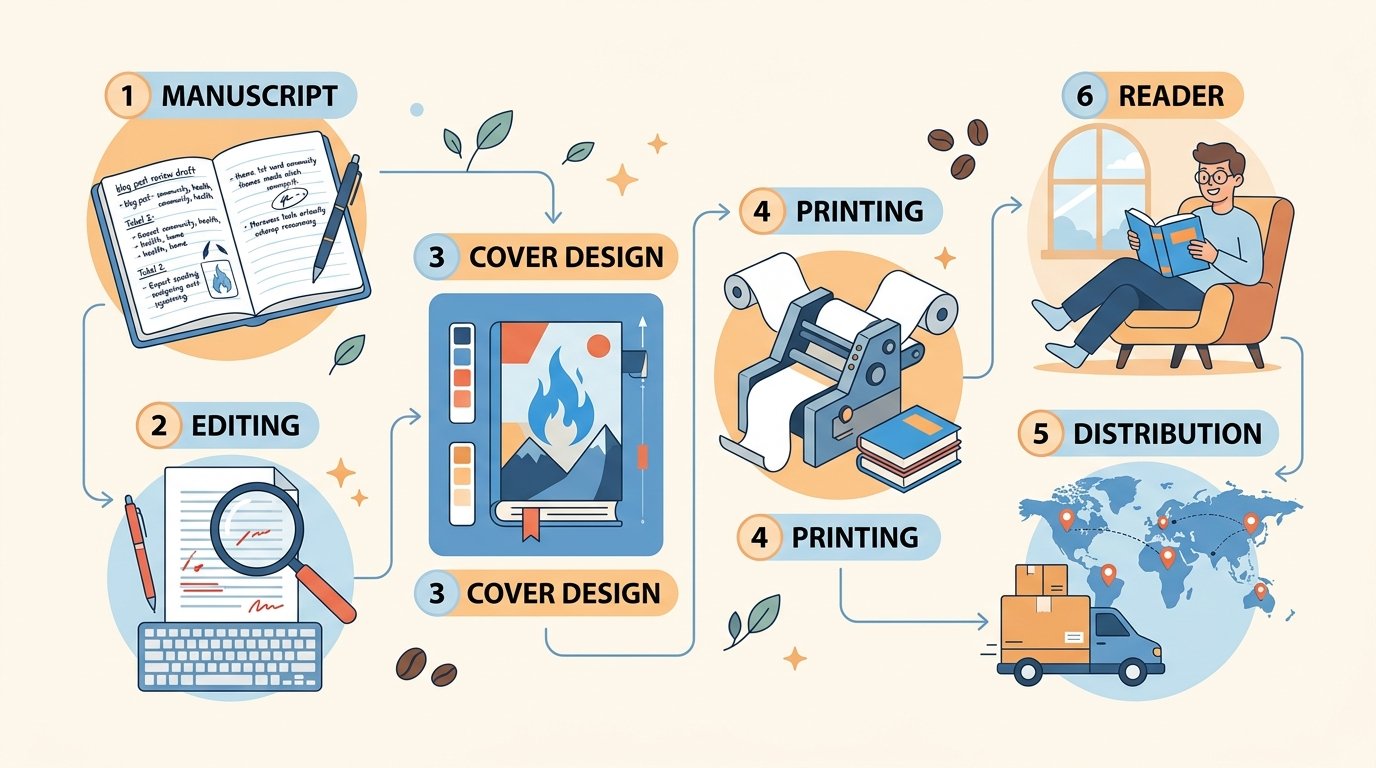
How Book Publishing Works (A Quick Primer)
Since many visitors come looking for real publishing help, here is the foundation. Understanding it protects you from bad deals.
Traditional Publishing
In traditional publishing, a publisher pays the costs of editing, design, printing, and distribution. Authors usually work through a literary agent, who pitches the manuscript to editors. The publisher takes most of the revenue and the author earns royalties, often alongside an advance.
Independent Publishing
Independent publishers are usually smaller houses. They may accept unagented submissions, offer closer author relationships, and focus on niche genres. Many literary publishers work this way. Because they are smaller, their marketing budgets are usually limited, so authors often share the promotion work.
Self-Publishing
The author handles or hires out every step. According to Wikipedia’s overview of self-publishing, the model relies heavily on digital platforms and print-on-demand technology, and many authors hire editors and cover designers as needed. You keep more control and a larger share of each sale, but you also carry the costs and the marketing burden.
Hybrid and Vanity Publishing
Hybrid publishers share costs and risks with the author. Vanity presses charge the author for everything, often with contracts that give up major rights. The difference matters. A reputable hybrid publisher is transparent about pricing and rights, while a vanity press tends to sell the dream of being published.
Self Publishing vs Traditional Publishing at a Glance
| Factor | Traditional | Self-Publishing |
|---|---|---|
| Upfront cost | Paid by publisher | Paid by author |
| Creative control | Shared | Full |
| Royalty share | Lower | Higher |
| Speed | Slow | Fast |
| Distribution | Wide retail reach | Depends on your effort |
How to Prepare a Manuscript Before You Submit
Good preparation improves your odds with any publisher. Follow these steps.
- Finish the draft. Fiction is usually judged on a complete manuscript. Nonfiction can often be pitched with a proposal.
- Revise in layers. Fix structure first, then scenes or chapters, then sentences.
- Get outside feedback. Beta readers and critique partners catch what you cannot see.
- Hire an editor if you can. A professional edit is especially useful for self-published books.
- Proofread last. Typos signal carelessness to agents and editors.
- Format correctly. Use standard manuscript formatting unless guidelines say otherwise.
Reading Book Submission Guidelines
Every publisher and agent sets its own rules. Read them closely.
Look for the genres they accept, the word count range, what to include in a query, and how long a reply usually takes. Send exactly what they ask for. Ignoring guidelines is the fastest route to a rejection.
Warning Signs to Check Before You Sign Anything
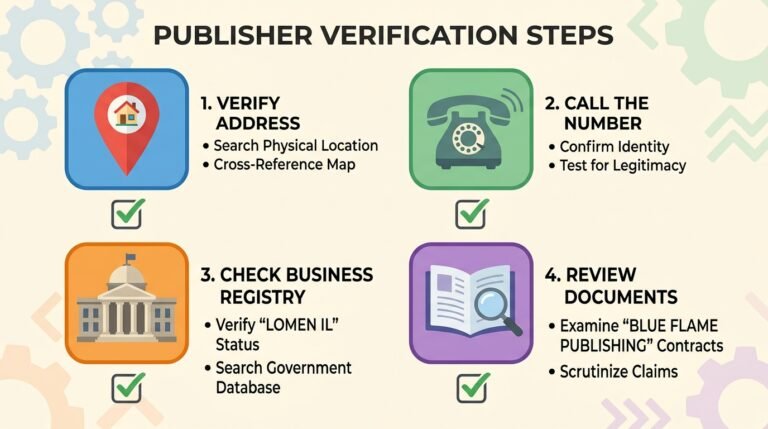
Whether you are reading about blueflamepublishing blog website or any other company, use this checklist.
- Upfront fees for “acceptance.” Legitimate publishers pay authors, not the other way around.
- Vague contracts. You should understand rights, royalties, and reversion terms.
- Pressure to decide fast. Good deals do not vanish in 24 hours.
- No verifiable books. Ask for titles you can find in stores or libraries.
- No named team. Real editors and staff have public track records.
- Guaranteed sales. No one can promise this honestly.
If anything feels off, ask a trusted author or an author advocacy group to review the offer.
Book Marketing and Promotion Basics
Publishing a book is only half the job. Readers must find it.
Build an Author Platform
An author platform is the audience you reach through your website, email list, and social channels. Start early. A simple site with a sign-up form is a strong first step.
Plan Your Book Launch
Effective launch strategies usually include a pre-launch email to your list, advance copies for early reviewers, a launch week push, and a follow-up plan for the months after.
Use Blogging the Right Way
Blogging can support book promotion when it is focused. Write about the themes in your book, share behind-the-scenes process notes, and answer questions your readers already ask. A blog that only advertises your book tends to be ignored.
Seek Reviews and Recommendations
Book reviews and reading recommendations build trust. Reach out to bloggers and reviewers who cover your genre, and respect their submission rules.
Common Mistakes New Authors Make
- Querying before the manuscript is polished
- Skipping research on a publisher’s track record
- Paying for services without comparing quotes
- Ignoring the cover and book description
- Waiting until launch day to start marketing
- Assuming a website’s claims are proven facts
Tips for Getting More Value From Any Publishing Blog
- Check the publication date of every post.
- Look for author bylines with real credentials.
- Cross-check statistics with a second source.
- Bookmark the categories that match your goals.
- Use blogs for ideas, and use contracts and professional advice for decisions.
For a first pass, the Blue Flame Publishing homepage and the Blogger’s Life section are the best places to judge whether the writing style suits you.
Frequently Asked Questions
Final Verdict
The blueflamepublishing blog website is best understood as a general-purpose blog with a publishing-flavored name. It offers readable, beginner-friendly posts on blogging, technology, and trends. It does not appear to be a traditional book publisher with a public catalog, and it should not be treated as one.
If you are an author, use it as one input among many. Verify claims, protect your rights, and compare any publisher against the warning signs above. Good publishing decisions come from careful research and patience, and that will serve you better than any single website.
Sources used for research: