
blueflamepublishing net lomen il: Exposed A Real Guide to Verifying Any Publisher
If you searched “blueflamepublishing net lomen il,” you probably expected to land on a page with a company address, a phone number, and some real information about a publishing business. Instead, you likely found a handful of vague blog posts that praise the site in general terms and never actually answer basic questions like where the company is based or who runs it.
That is not an accident. It is a pattern, and once you know what to look for, you can spot it in seconds.
This article breaks down what is actually going on with blueflamepublishing net lomen il, why “Lomen IL” is not a real location, and how you can protect yourself when researching any publisher, agent, or writing service online.
What You Actually Find When You Search blueflamepublishing net lomen il
Search results for blueflamepublishing net lomen il, blueflamepublishing.net address, or blue flame publishing contact turn up a small cluster of nearly identical blog posts. They live on a few different domains, including blueflamepublishing.net itself and a lookalike site, blueflamepublishing.org.
These posts use similar language every time. Phrases like “seamless publishing journey,” “bridging the gap between authors and readers,” and “igniting the literary world” show up repeatedly, almost word for word, across different articles. None of them list:
- A physical street address
- A working phone number
- A named founder, editor, or staff member with a verifiable background
- Client names, published titles, or ISBNs you can look up
That last point matters most. A real publisher has a catalog. You can search their books on Amazon, WorldCat, or the Library of Congress. Blue Flame Publishing net has none of that.
Why Lomen IL Is Not a Real Place
Here is something you can check yourself in about thirty seconds. Illinois does not have a town, village, or township called Lomen.
There is a real village named Lomen, but it is in Vestre Slidre Municipality in Innlandet county, Norway, home to the historic Lomen Stave Church. It has nothing to do with Illinois publishing.
The closest actual Illinois place name is Lomax, a small village of a few hundred residents in Henderson County, near the Mississippi River. Lomax and Lomen are different names entirely, and neither one has any documented connection to a publishing company.
When a business listing pairs a company name with a location that does not exist, that is one of the clearest signs you are looking at a fabricated or auto-generated business profile rather than a real company address.
How Sites Like This Usually Work
What we are describing here is a known pattern in low-quality SEO: a network of thin, AI-written blog posts built around a brand name, designed to fill the search results before anyone searches for reviews or complaints. Instead, they run into more of the same self-promotional content.
The goal is usually one of two things. Either the site is trying to rank for a business name so it can sell advertising or affiliate links, or it is trying to build fake credibility ahead of asking people to pay for publishing packages, submission fees, or editing services.
Neither goal requires the business behind it to actually exist in the way it claims. That is exactly why checking for a real address, a real phone number, and a real public track record matters so much before you send anyone your manuscript or your money.
Common Red Flags That a Publishing Company Might Not Be Legitimate
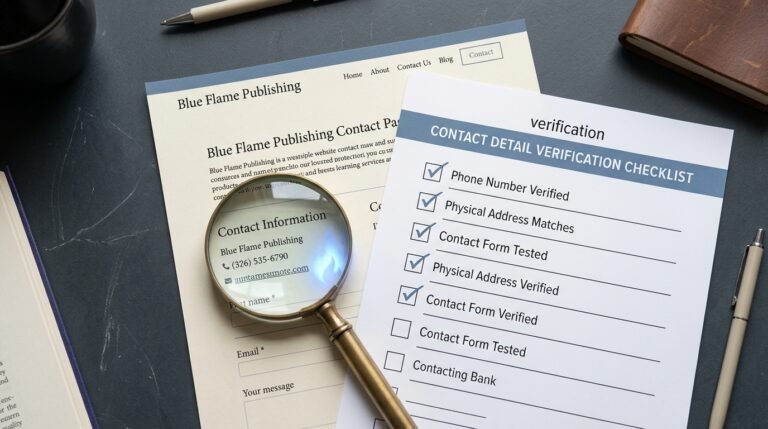
No verifiable street address
A legitimate publisher, even a small independent one, will list an address you can find on Google Maps and confirm belongs to an office, a home-based business, or a registered agent. If the only “location” you can find is a city or state mentioned in a blog post, with no street address anywhere, treat that as a warning sign.
No working phone number
Real publishing businesses, even solo operations, typically list a phone number or a contact form tied to a named person. If every page says “contact us” but never gives a number, or the number goes nowhere, that is worth noting.
Recycled or duplicate content across multiple domains
If you notice the same paragraphs, the same phrases, and the same claims appearing on two or three different websites with slightly different names, that is a strong sign of a content network rather than one real business with a blog.
Vague testimonials with no names
Watch for lines like “authors report positive experiences” or “customer feedback highlights satisfaction” without a single named author, a specific book title, or a link to a real review on Trustpilot, Google, or the Better Business Bureau.
No entry in official business registries
Every state, including Illinois, maintains a public database of registered businesses. If a company claims to operate in a state but has no record in that state’s official registry, that is a serious red flag.
How to Verify Any Publisher Before You Pay or Submit Your Manuscript
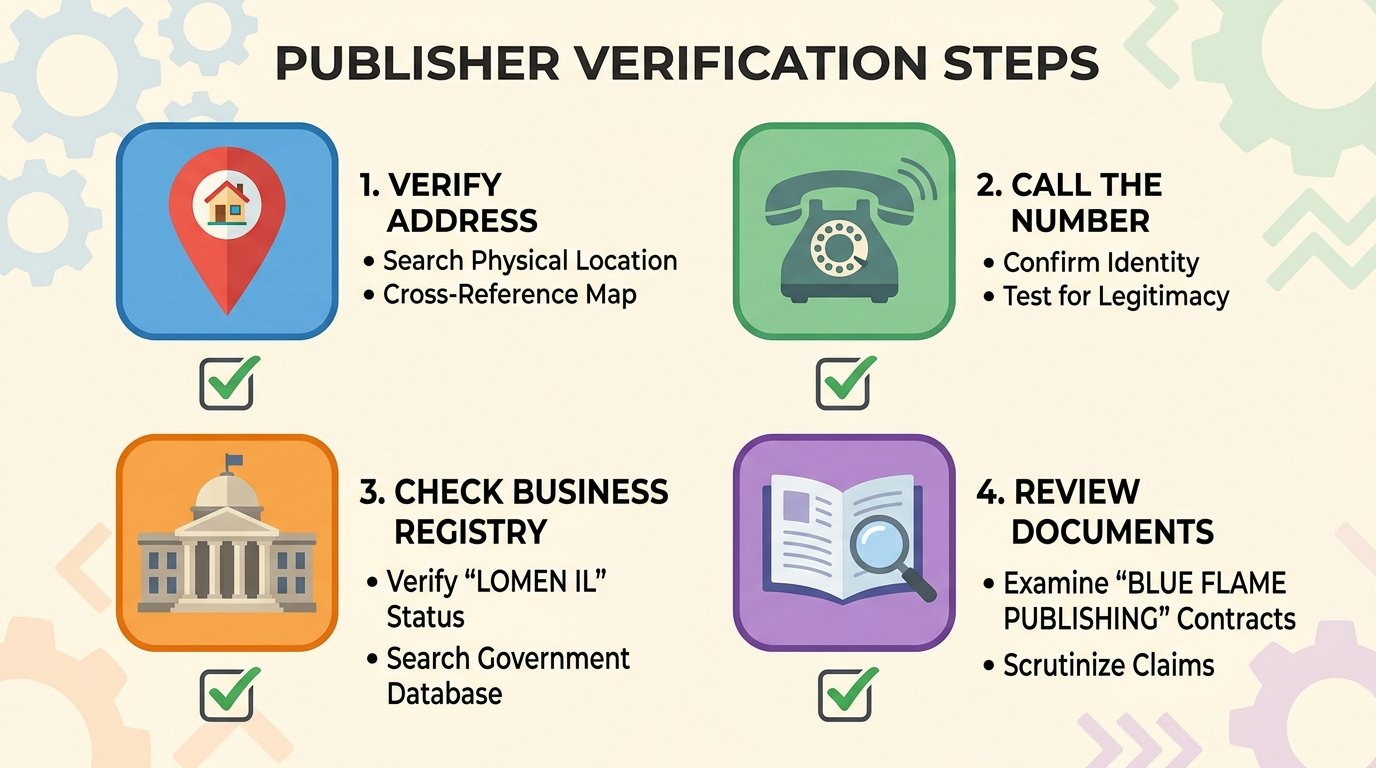
You do not need to be an investigator to check whether a publishing company is real. These steps take a few minutes each.
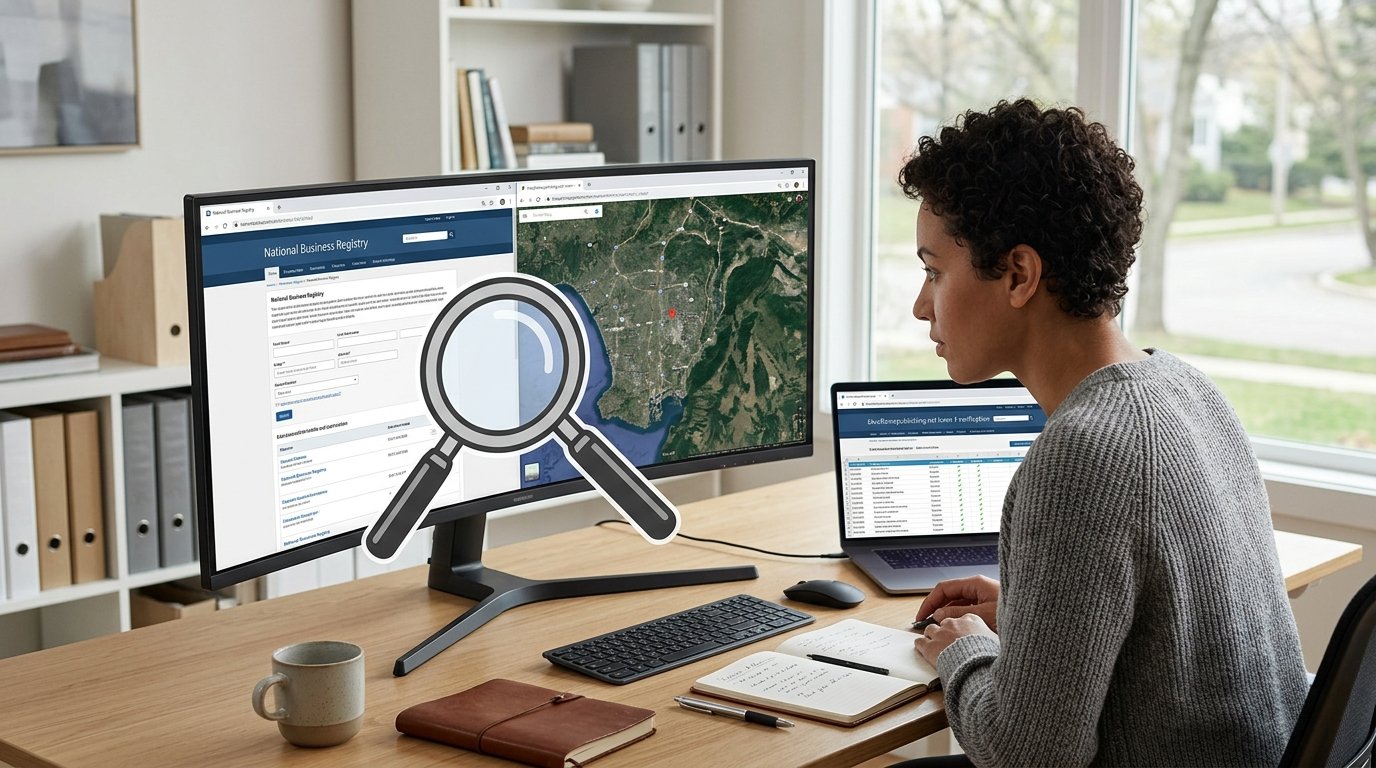
Search the Illinois Secretary of State business database
The Illinois Secretary of State runs a free public business entity search. Type in the company name. If nothing comes up, and the business claims to be based in Illinois, that is a major problem.
Look up the domain’s registration history
A WHOIS lookup on a domain like blueflamepublishing net lomen il shows when it was registered and sometimes who registered it. Domains that are only a year or two old, with no history, paired with claims of being an established publisher, do not add up.
Check the Copyright Office and ISBN records
Real publishers register books. You can search the U.S. Copyright Office public catalog or Bowker’s ISBN database for any titles supposedly released under the company name. If a publisher claims to have helped authors succeed but has no searchable titles, ask why.
Look for reviews on independent platforms
Check the Better Business Bureau, Trustpilot, and Google Business Profile for the company name. Independent review platforms are much harder to fake at scale than a company’s own blog.
Confirm the address with a map tool
If a business gives you a street address, look it up on Google Street View. See whether it is an actual office building, a shared mailbox service, or a residential home with no signage.
Ask for a live phone call before signing anything
A legitimate publisher will get on a call with a prospective author. If a company only communicates through email or a contact form and avoids a real conversation, slow down.
Real Independent Publishers Worth Knowing About in Illinois
If you are genuinely looking for a publisher based in Illinois, there are established, verifiable options with real offices, real staff, and real catalogs you can search, including Chicago Review Press and Agate Publishing. Both have a documented history, listed titles, and public contact information. Comparing any new company you find online against publishers like these is a useful gut check. If the new company cannot show the same basic transparency, that tells you something.
What To Do If You Already Paid or Sent Your Manuscript
If you already sent money to a company that matches this pattern, contact your bank or card issuer right away and ask about a chargeback or dispute, since most card networks have a window for reporting this kind of issue. Save every email, screenshot, and invoice. You can also file a complaint with the Federal Trade Commission and with your state attorney general’s consumer protection office. If you shared a manuscript, keep proof of when you registered your copyright, since your legal ownership of the work does not depend on this company at all.
Frequently Asked Questions
The Bottom Line
Searching for blueflamepublishing net lomen il should have led you to a company profile with a real address and a real phone number. Instead, it leads to promotional blog content and a location that does not exist on any Illinois map.
That does not automatically mean fraud is happening, but it does mean you should not treat this search result as proof of a legitimate publisher. Before you submit a manuscript or pay any fee to a publishing company, whether it is this one or any other, run it through the verification steps above. A few minutes of checking can save you a lot of trouble later.
Source: Lomen, Norway on Wikipedia


One Comment