@blueflamepublishing Net: Review Uncovers Important Facts Every Author Should Know
If you searched for blue flame publishing, @blueflamepublishing net, or www blueflamepublishing net, you probably want a straight answer to a simple question. Is this a real book publisher, and can it help you get your manuscript into print?
I spent time going through the actual @blueflamepublishing net website, checking related domains, reading third party safety reports, and comparing what this site offers against how real publishing companies operate. Here is what I found, without the fluff.

What @blueflamepublishing net Actually Is
@blueflamepublishing net presents itself as a digital publishing platform. The homepage talks about “the storytelling heart of the blogging world” and promises insights on blogging, technology, and lifestyle trends.
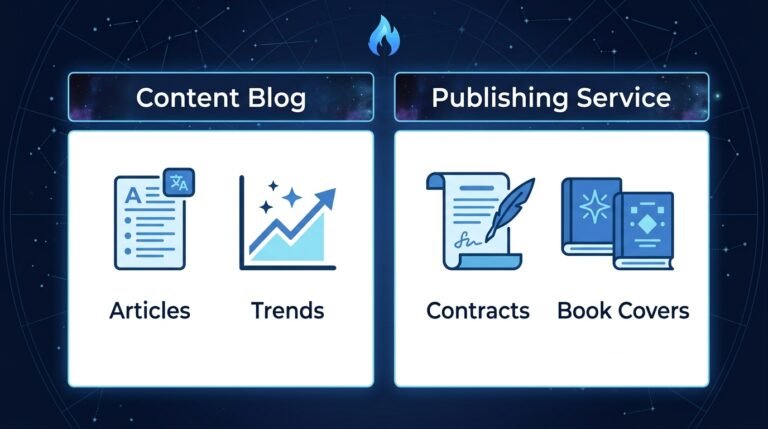
In practice, @blueflamepublishing net functions as a general content blog. It publishes articles across a wide mix of topics including data center decommissioning, online casinos, SEO agencies, home renovation, dating apps, and workplace AV systems, alongside pieces about “blue flame publishing” itself.
This is worth pausing on. A genuine book publisher’s website usually centers on one thing: its authors, its titles, and its submission process. A site that publishes gambling guides, tech reviews, and publishing content side by side is behaving more like a general interest blog network than a book publishing house.
That does not automatically make the site fraudulent. Plenty of blogs cover unrelated subjects. But if you arrived here hoping to submit a manuscript to blue flame publishing as a traditional or hybrid publisher, the mixed content is your first signal to slow down and verify before you send anything.
The Confusing Web of Similar Domains
One of the most important things to understand about @blueflamepublishing net is that the name is not tied to a single, verified company. During research, I found several separate websites using nearly identical branding:
- blueflamepublishing.net
- blueflamepublishing.org
- blueflamepublishing.co.uk
- blueflamespublishing.com
- blogblueflamepublishing.co.uk
- blueflamepublishingblog.com
- blueflamepublish.wixsite.com
Each of these sites uses similar language about “igniting creativity,” “author-centric publishing,” and “storytelling.” Several of them publish nearly identical articles about each other, creating a loop of self-referencing content.
There is also a genuinely different and unrelated company called @blueflamepublishing net that was set up by Olivier Gavrois in the video game industry, which has nothing to do with book publishing at all.
This overlap matters. If you are trying to verify @blueflamepublishing net contact information, an official website, or a real submission portal, you need to know which domain you are actually dealing with, since they do not appear to be the same organization.
What the Contact and About Pages Reveal
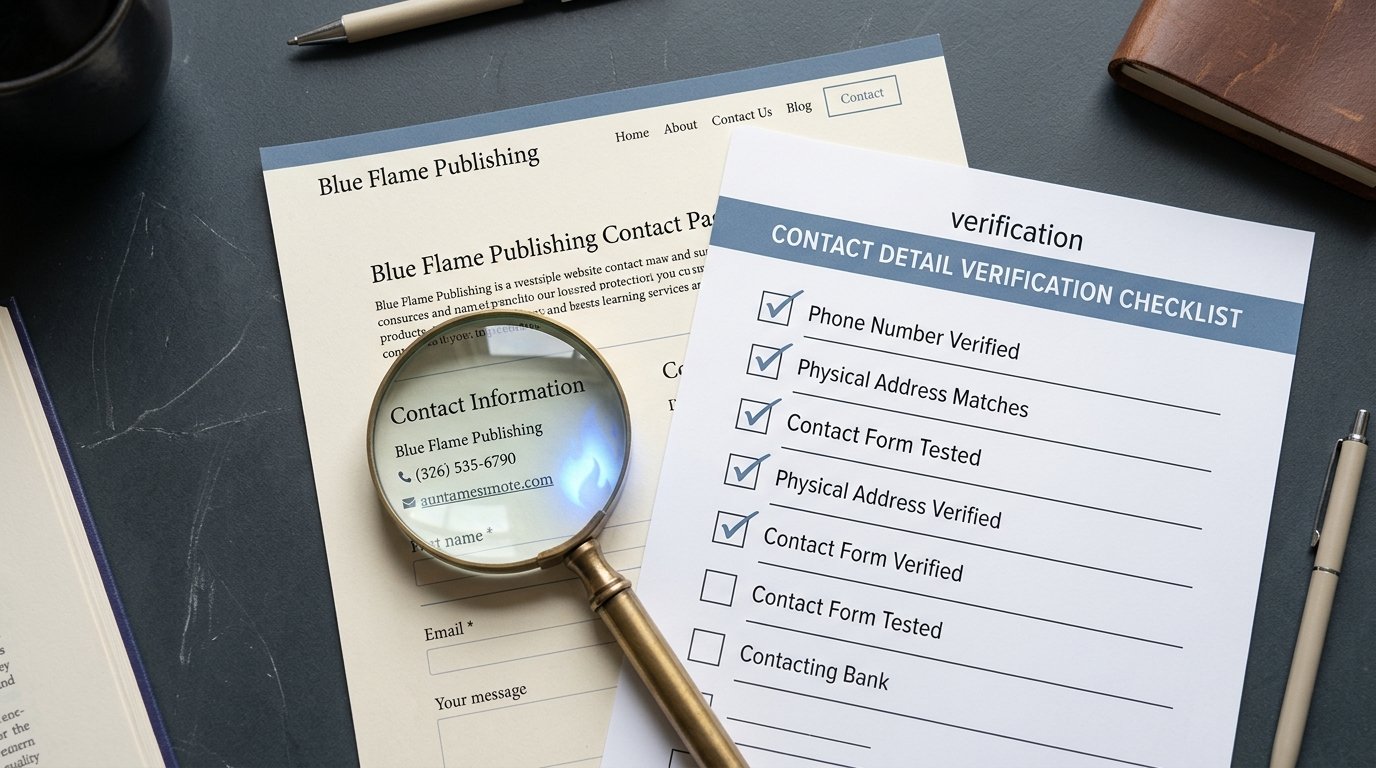
Every legitimate publisher lists a real business address, a working phone line, and named editorial staff. I checked the blue flame publishing address listed on blueflamepublishing.net, and it points to 5142 Talmoros Street, Lomen, Illinois, zip code 90356.
That address does not check out. There is no city named Lomen in Illinois, and 90356 is a California zip code range, not an Illinois one. A mismatched or fictional address on a company’s official contact page is a meaningful red flag for anyone considering @blueflamepublishing net submissions or a paid publishing service.
The site also lists author bylines such as Falmendis Kolfin and Rolendor Karnis. These names do not appear in any publishing industry database, writer’s guild registry, or literary agency directory outside of this specific website network. That does not prove anything on its own, but combined with the address issue, it points toward content that has not been through the kind of editorial transparency you would expect from an established blue flame publishing company.
Is @blueflamepublishing net Legit or a Scam
Third party website safety checkers give @blueflamepublishing net a moderate to reasonably good technical safety score, based on things like SSL encryption and server behavior. A decent safety score means the site probably will not install malware on your computer or steal your login credentials through a fake form.
It does not mean the business claims on the site are accurate. Safety scores measure technical risk, not editorial honesty or business legitimacy. A related domain in the same content cluster, blueflamepublishingblog.com, actually received a lower trust score from an independent scam checking service, partly because of its young domain age and the pattern of one company’s website discussing another company’s website in unusual detail.
So the honest answer is this. @blueflamepublishing net is not confirmed to be a dangerous website in the technical sense. But there is currently no independently verifiable evidence that it operates as a real, functioning book publisher with a catalog of published titles, a physical office, and an accountable editorial team. Treat any claims about published authors, bestseller success stories, or professional publishing services on this specific site with caution until you can confirm them independently.
What a Real Independent Publisher Looks Like
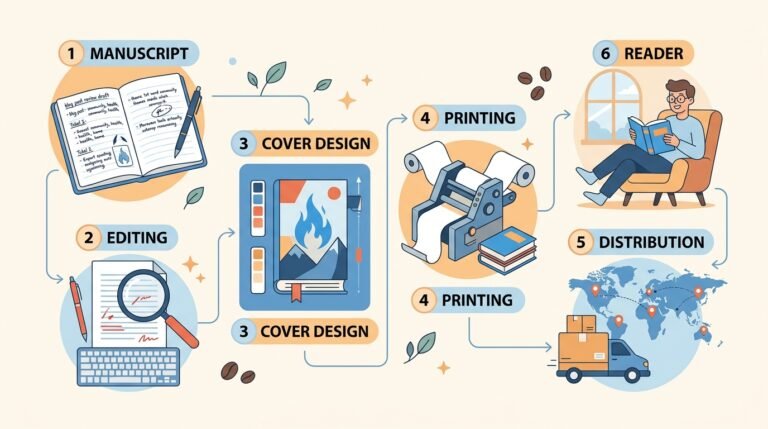
Since a lot of people search this keyword while trying to figure out where to submit their book, it helps to know what a legitimate publishing company actually provides.
Clear Submission Guidelines
Real publishers post specific manuscript submission requirements. This usually includes accepted genres, word count ranges, formatting rules, whether they accept simultaneous submissions, and expected response times. If a site’s submission guidelines are vague or missing entirely, that is a problem.
A Verifiable Catalog
You should be able to find the publisher’s past titles on Amazon, in libraries, or through databases like WorldCat or the Library of Congress. A publisher with zero searchable book titles anywhere outside its own website has not actually published books yet, no matter what its homepage says.
Named, Findable Staff
Legitimate publishing houses list editors, acquisitions staff, or a founder with a LinkedIn profile or industry history. You can usually find them mentioned in writer’s forums, industry news like Publishers Weekly, or professional associations such as the Independent Book Publishers Association.
Transparent Business Terms
Whether a publisher works on a traditional royalty model, a hybrid cost sharing model, or a self publishing service fee, the terms should be written in plain language before you sign anything. Real publishing contracts specify rights, royalties, distribution, and reversion clauses clearly.
A Physical, Confirmable Address
You should be able to verify the address through a basic search or Google Maps. If the address does not exist or leads to an unrelated residential property, that is a serious warning sign.
How to Vet Any Publisher Before You Submit
Here is a practical checklist I recommend for any writer, whether you are looking at blue flame publishing or any other name you find online.
Search for the company name plus the word complaints or reviews. Genuine publishers usually have a mix of author feedback across several independent sites, not just content the company published about itself.
Check domain age and ownership. Tools like WHOIS lookups show how long a site has existed. A publishing company claiming years of experience but running on a domain registered recently deserves a closer look.
Ask for names of currently published authors and try to reach them directly. A real publisher will not hesitate to connect you with existing clients.
Never pay upfront fees disguised as mandatory services unless you fully understand what you are paying for and have researched typical market rates for editing, cover design, and formatting.
Compare against known, established publishers such as Simon & Schuster, HarperCollins, or well documented independent presses, and hybrid publishers like She Writes Press, which have public track records.
Common Mistakes Authors Make During This Search
Many writers searching for @blueflamepublishing net books, blue flame publishing authors, or blue flame publishing catalog make a few avoidable mistakes.
They assume a professional looking website automatically means a professional operation. Website design has gotten cheap and easy, and it says nothing about editorial quality or business legitimacy.
They skip checking the actual physical address or business registration. This single step catches most fake or unverified companies quickly.
They confuse similarly named sites, submitting information or manuscripts to the wrong domain entirely because the branding looks identical.
They do not ask other writers. Author forums, Reddit’s writing communities, and groups like Absolute Write have threads dedicated to vetting exactly this kind of publisher.
Frequently Asked Questions
Final Thoughts
@blueflamepublishing net shows up in a lot of searches right now, partly because of a cluster of similarly branded websites all publishing content about each other. That pattern alone is unusual for a real publishing house.
If you are an author looking for somewhere to submit your manuscript, treat this specific site as unverified rather than assuming it is a functioning publisher. Do the basic checks first. Confirm the address, look for a real catalog of books, and search for independent feedback from actual authors.
Publishing your book is a big step, and the company you trust with it should be easy to verify, not something you have to piece together from scattered blog posts.
Sources
Blue Flame Publishing company profile, PocketGamer.biz, https://www.pocketgamer.biz/industry/blue-flame-publishing/
Website safety review, Scamadviser, https://www.scamadviser.com/check-website-old/blueflamepublishingblog.com
Independent Book Publishers Association, https://en.wikipedia.org/wiki/Independent_Book_Publishers_Association