
Explore Blueflamepublishing the Future and the Truth Behind the Hype
If you typed “explore blueflamepublishing the future” into Google, you probably want two things. You want to know what Blue Flame Publishing actually is, and you want to know where publishing is going.
Both answers are more interesting than the hype suggests.
This guide separates what can be verified from what is only repeated across dozens of look-alike articles. You will also get current data on self-publishing, AI, audiobooks, and discovery, explore blueflamepublishing the future plus a practical checklist for choosing any publishing service in 2026.

What Is explore blueflamepublishing the Future?
The short answer is that it depends on which page you read. That confusion is the reason this topic is worth writing about carefully.
What the official site actually shows
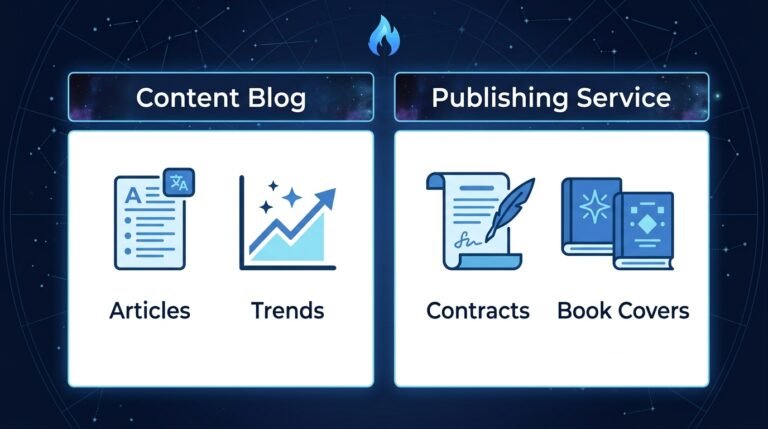
The homepage at explore blueflamepublishing the future uses the tagline “Explore the Future with Blue Flame Publishing.” It describes itself as a place for stories from the life of a blogger, technology insights and the latest trends. The main menu lists Home, Blogger’s Life, Tech, Latest Trends, About and Contact. blueflamepublishing
In other words, the live site works like a general blog and digital media hub. It publishes articles about blogging, technology, content creation and trends. The Latest Trends section is at https://blueflamepublishing.net/category/latest-trends/ if you want to see the editorial mix yourself.
You will also notice a wide range of topics. Posts on marketing, travel, sports analytics and online entertainment sit next to posts on writing and publishing. That variety tells you it is not a focused book publisher with a single editorial mission.
Why search results disagree
Many third-party pages describe explore blueflamepublishing the future as a full author service. Some say it handles professional editing, cover design, interior formatting, distribution and marketing. Others treat it as a hub for manuscript submission, editing, formatting and digital distribution. SomethingnewnowGu1vn Mobile
One recent review makes a fair point. It says the current live website should be distinguished from older or unrelated descriptions of similarly named publishing businesses. Celebritystories
That is good advice. Several similar domains exist, including blueflamepublishing.org and a few blog-style sites with near-identical names. I could not confirm that they share an owner. Always check the exact domain and read the About and Contact pages before you trust any of them.
Blue Flame Publishing for Authors and Creators
Can independent authors and creators get value from the site? Yes, with realistic expectations.
As a reader-facing blog, it can spark ideas about blogging, audience growth and content strategy. The site’s own pages, such as the guide at https://blueflamepublishing.net/on-the-blog-blueflamepublishing/, are written for that purpose.
What you cannot confirm from the official pages is a publishing contract, an ISBN service, a royalty schedule or a print on demand arrangement. If you plan to pay for author services, ask for those details in writing. If a page tells you what the company “offers” but never shows a price list, a sample contract or a named team, treat that as a warning sign.
How Publishing Is Changing Right Now
Forget any single website for a moment. The bigger story is what is happening to the whole industry, and it matters far more to your book.
Self-publishing now dominates title volume
The numbers are striking. More than 3.5 million self-published titles received ISBNs in the US in 2025, up 38.7% from 2.5 million in 2024. Traditional publishers released 642,242 titles in the same year. bestwritingbestwriting
That means independent authors now produce most new books in America. Bowker’s own explanation is that editing, cover design, distribution and marketing services are now available to authors directly. The old gatekeeping role of publishers has weakened, at least on the production side. If you want background on how this model works, Wikipedia has a solid overview of self-publishing at https://en.wikipedia.org/wiki/Self-publishing. Marketintelligencetools
More books also means more noise. Publishing is easier than ever, and getting noticed is harder than ever.
AI in book publishing is helpful and controversial.
AI has become part of nearly every stage of publishing. Authors use it for outlining, editing help, cover concepts, translation and audiobook narration.
Adoption is real. A BookBub Partners survey found that about 45% of authors use generative AI in their work. The same survey found that 74% of those authors do not tell readers about it. ManuscriptReportManuscriptReport
Platforms are responding. Amazon KDP now requires authors to disclose AI-generated content on each upload and limits standard accounts to three new titles a day. The Authors Guild has also launched a human-authored certification program. Built&Writtenselfpublishing
The lesson is simple. AI-assisted publishing is fine when you stay transparent and keep your own voice at the center. Readers are learning to spot generic text, and human perspective is becoming a selling point.
Audiobooks keep growing
Audio is the fastest-moving format. Audiobooks are growing about 26% a year and have passed e-books in US market share. The Audio Publishers Association found that 51% of Americans aged 18 and older have listened to an audiobook. selfpublishingISBNdb
For independent authors, falling production costs make audio realistic. Many now record an audio edition alongside the ebook and paperback.
Discovery is shifting to social and search.
Readers find books in new places. BookTok is credited with influencing 59 million US print book sales in 2025. Short videos, newsletters, author websites and AI-powered search now sit beside Amazon listings as discovery channels. selfpublishing
This is where blogs like the one at explore blueflamepublishing the future play a small but real role. A strong author blog gives search engines and readers something to find before your book even launches.
Publishing Trends 2026: Every Independent Author Should Plan For
Here is what the data points to for the next year or two.
- Direct-to-reader sales. More authors are selling through their own stores and newsletters to keep a larger share of revenue.
- Format coverage. Almost all indie authors publish both ebooks and paperbacks. Audio is the next expected step. bestwriting
- Disclosure and trust. Expect stricter AI rules from retailers and clearer labeling for readers.
- Subscription income. More authors are launching subscription models similar to Patreon for steady income. Automateed
- Global reach. Better translation tools make international markets easier to enter.
- Voice and proof. As AI books multiply, real expertise, reviews and a recognizable author brand matter more.
Traditional, Hybrid, and Self-Publishing Compared
Choosing a path is the biggest decision you will make, so here is a plain comparison.
Traditional publishing means a publisher buys your rights, pays an advance and handles production. You get distribution muscle but give up creative control and wait longer.
Self-publishing means you keep your rights and control every choice. You also pay for editing, design and marketing yourself, or do the work.
Hybrid publishing sits between the two. You usually pay for services while the publisher shares some risk and offers help with distribution. Quality varies widely, so vet these companies with extra care.
How to Choose a Publishing Service Without Getting Burned
This checklist works for explore blueflamepublishing the future or any other company that claims to offer author services.
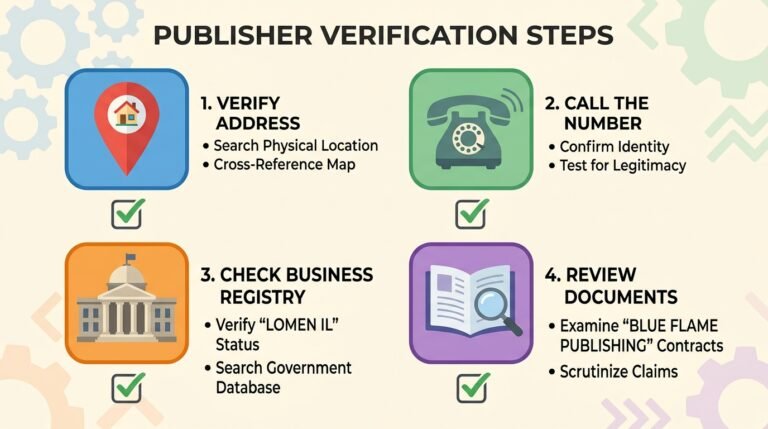
Check who is behind it
Look for a real company name, a physical address, named staff and a working contact page. If you cannot find these, walk away.
Ask about rights and royalties
You should keep your copyright. Ask for the exact royalty rate, how it is calculated and how often you are paid. Watch out for clauses that tie up your book for years.
Understand the service list
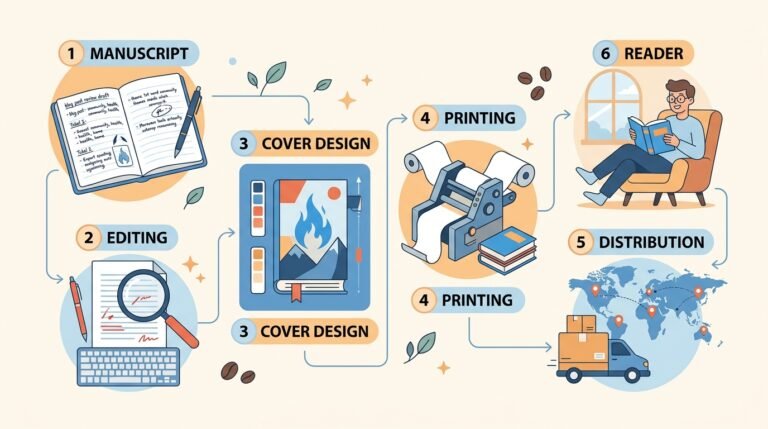
Ask for each item in writing. Manuscript editing, cover design, book formatting, ISBN registration, ebook conversion, print on demand setup and marketing support should each have a clear scope and price. Confirm that the ISBN is registered in your name or your imprint’s name, because that controls who is listed as the publisher.
Look at distribution
Ask where the book will actually be sold. Global distribution through retailers and libraries is not the same as simply uploading a file to a single store.
Verify results, not promises
Ask for sample books, author references and real sales examples. Search the company name along with words like “complaints” and “review.”
A Practical Example
Imagine a debut author named Maya. She writes a cozy mystery and finds a site with a slick promise of “complete publishing support.”
Before paying, she runs the checklist. The company has no named team, no sample contract and no royalty rate. She then compares it with buying editing and cover design from freelancers and uploading through KDP and a wide distributor herself.
The freelancer route costs roughly what the package quoted, but she keeps every right and sees every sale. The lesson is that a confident sales page proves nothing. A clear contract does.
Common Mistakes Authors Make
- Trusting look-alike sites. Similar domain names often point to unrelated businesses.
- Skipping professional editing. Readers forgive plain covers more than sloppy text.
- Ignoring metadata. Weak categories, keywords and descriptions bury good books.
- Publishing without a marketing plan. Start building an email list before launch.
- Hiding AI use. Disclose it where required and be honest with readers.
- Signing without reading. Have a publishing attorney review any contract with rights or fees.
How to Use explore blueflamepublishing the Future Wisely
Treat it as a source of ideas, not as a verified publishing partner. Read the Latest Trends section for topic inspiration, then confirm any statistic or claim with a primary source. Visit https://blueflamepublishing.net/ to see the current homepage and judge the editorial quality for yourself.
If you are a writer thinking about submitting content, read the site’s policies first and confirm terms directly through its Contact page.
Frequently Asked Questions
Final Thoughts
To explore blueflamepublishing the future honestly, start with what you can see. The official site is a blog about blogging, tech and trends, and it can be a useful reading stop.
The real future of publishing is bigger than one domain. It belongs to authors who stay transparent about AI, build their own audience, cover several formats and check every service before paying. Do the homework, protect your rights, and let your own voice do the heavy lifting.


3 Comments